

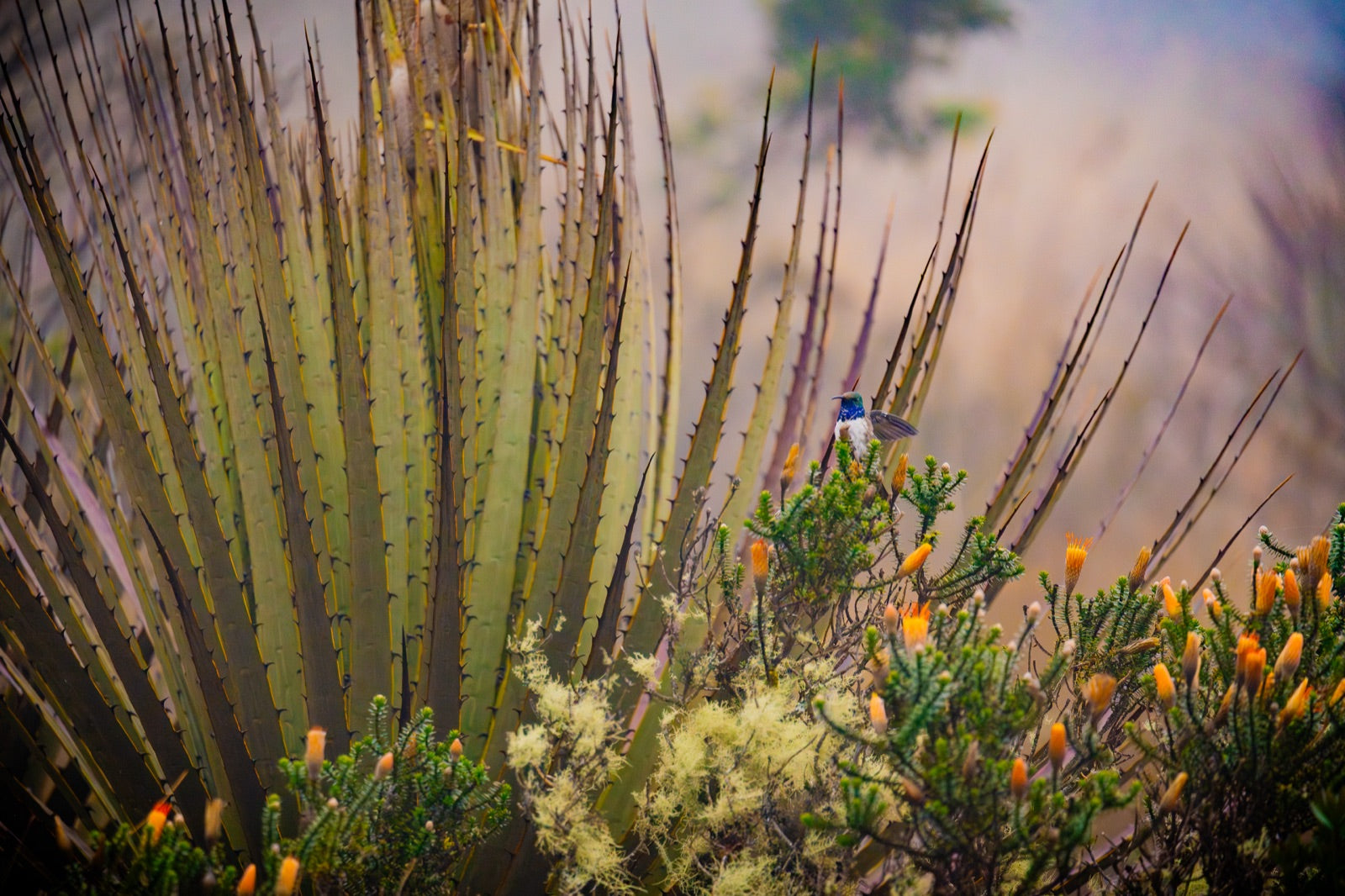
Blue-throated Hillstar
Discovered in 2018, fewer than 750 remain. It lives only on a few high ridges in southern Ecuador.
Oreotrochilus cyanolaemus, Critically endangeredPhoto: Afuera Producciones, courtesy of Fundación Jocotoco
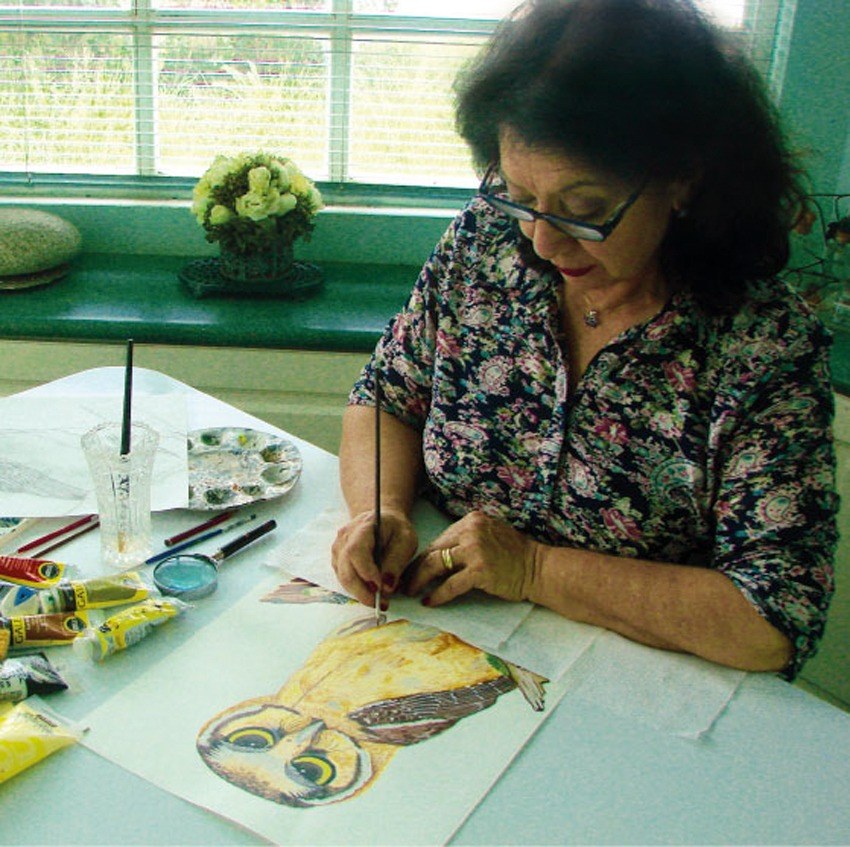
Savia Nature is one artist, a brush, and the birds of Ecuador. Every design begins as a hand-painted acrylic, then printed to order on organic cotton.
Every design is a real bird, painted by hand. If wearing one makes someone look twice at the wild, the painting has done its work.
Savia means sap, the quiet thing that keeps a plant alive. Each design starts the same way: a real Ecuadorian bird, studied and painted in acrylic in Quito, then printed to order on organic cotton. Ten percent of every sale goes to Fundación Jocotoco, for two of the country's most endangered birds.
Lilly Sylva
Founder and artist, Savia Nature

Passionate about nature since childhood, Lilly pours that love into meticulous hand-painted designs, made to help people know Ecuador's extraordinary biodiversity more deeply and care about protecting it.

Lilly was born in Quito and still paints from there, a capital city set high in the Andes and ringed by cloud forest. Her inspiration reaches across all of Ecuador, one of the most biodiverse countries on earth, where four ecosystems meet within a single small country. Every bird she paints is drawn from somewhere in that wild.
Each bird starts as a hand-painted acrylic, painted from field photos and references. Days of work per design.
High-resolution scans keep every brushstroke and pigment edge intact.
Your piece is printed on GOTS-certified organic cotton, made to order. Delivery in 7 to 14 business days.
A tenth of your purchase goes to Fundación Jocotoco for the Hillstar and the Puffleg.
Ecuador packs cloud forest, islands, coast, and rainforest into a country the size of Colorado. Each collection follows the birds of one of them.
Every sale sets aside 10% for Fundación Jocotoco, transferred once a year on October 29. Not to conservation in general, to these two birds.

Discovered in 2018, fewer than 750 remain. It lives only on a few high ridges in southern Ecuador.
Oreotrochilus cyanolaemus, Critically endangeredPhoto: Afuera Producciones, courtesy of Fundación Jocotoco
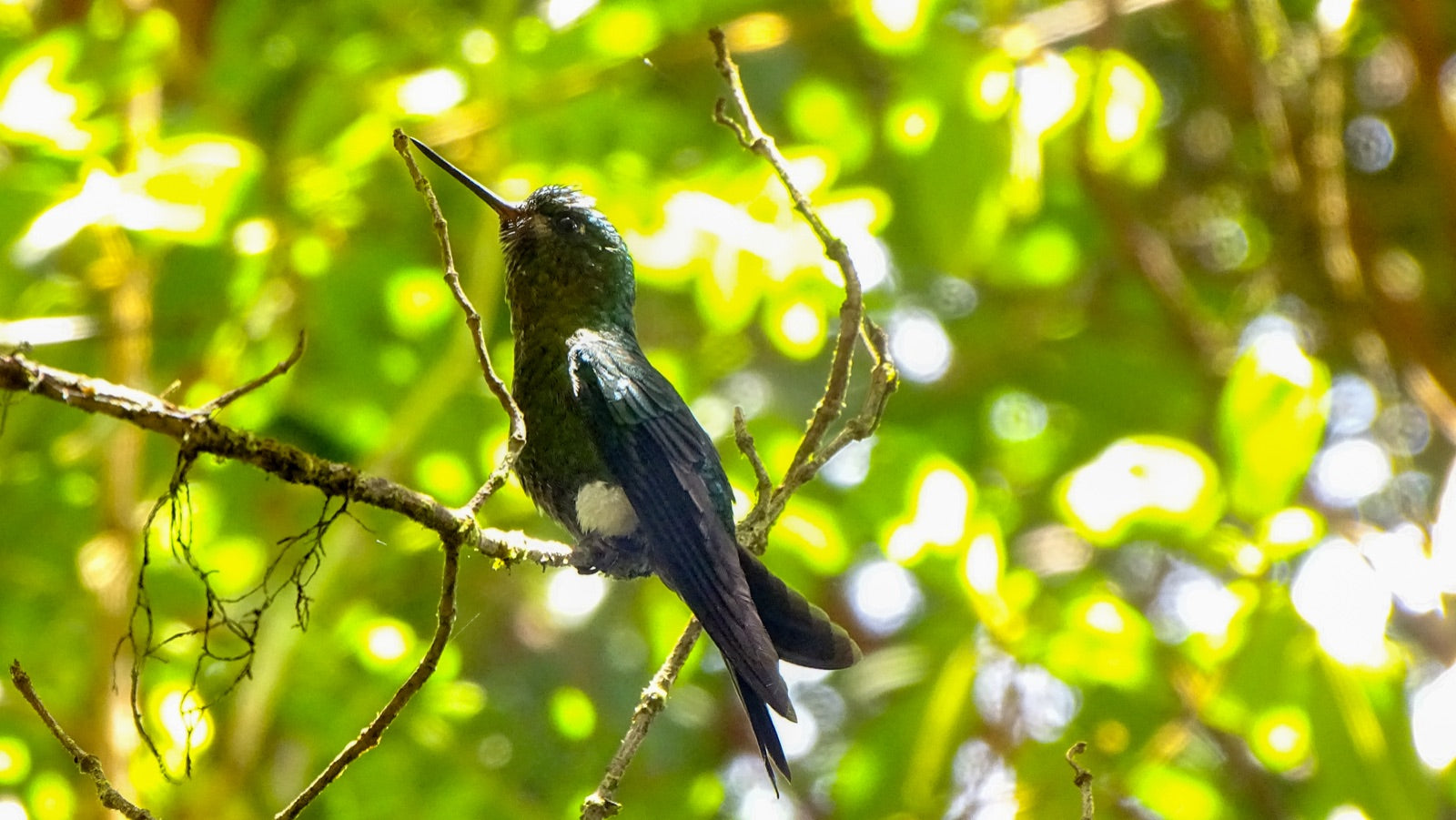
Fewer than 200 remain, all near Quito. Yanacocha protects the cloud forest it depends on.
Eriocnemis nigrivestis, IUCN CRPhoto: Santiago Arroyo, courtesy of Fundación Jocotoco